

Ensuring that the server correctly handles the end of a chunked transfer and properly cleans up the socket buffer is essential to maintaining smooth, error-free communication between clients and servers.
HTTP is one of the fundamental protocols for communication between browsers (clients) and web servers. One of its features is the ability to maintain open connections with the keep-alive option, which allows for improved efficiency by reusing the same TCP connection for multiple requests.
However, this functionality can bring with it some challenges, especially when using chunked transfer encoding (Transfer-Encoding: chunked) since junk data can remain on the socket in keep-alive connections, interfering and causing errors.
Understanding Transfer-Encoding: chunked
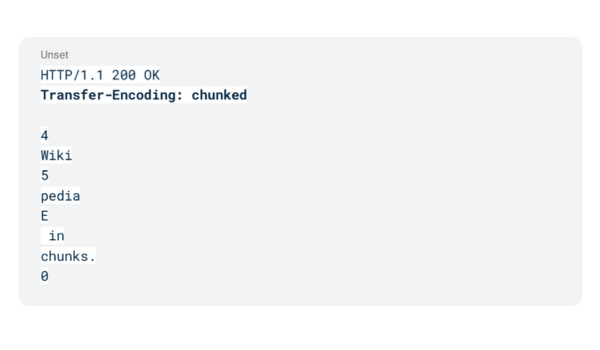
First, let’s briefly look at how Transfer-Encoding: chunked works. This mechanism allows the server to send data in a series of chunks, which is useful when the server does not know the total size of the data in advance. Each chunk is preceded by its size in hexadecimal, followed by the chunk data, and ends with an end-of-line marker. The end of the transfer is indicated by a chunk of size zero.
Example of a response with Transfer-Encoding: chunked:
The problem: junk data in the socket
In scenarios where keep-alive connections are used, if the server does not properly handle the end of the chunked transfer, it is possible that unwanted data (junk) remains on the socket, which can interfere with subsequent requests reusing the same connection.
Suppose you have a server that sends responses encoded in chunks. If the server does not properly read and handle the zero-size chunk that marks the end of the transfer, the remaining data on the socket may be interpreted incorrectly by the client in the next request.
Problem diagnosis
To diagnose this problem, you can use tools that analyze data packets such as Wireshark (open source) or enable detailed logging on your server and client.
Look for patterns where the expected data ends up correctly but you see additional content that shouldn’t be there in subsequent responses.
Example of a log showing the problem:

Fix
– Make sure the server handles the end of the chunked transfer correctly:
- The server should send the zero-size fragment (0\r\n\r\n) to indicate the end of the data.
- After sending the final fragment, make sure that the server does not send any additional unwanted data.
– Check server settings:
- Some servers have specific settings to handle keep-alive & Transfer-Encoding: chunked. Please review the documentation and make sure the settings are set correctly.
– Clean the socket:
- After sending a fragmented encoded response, verify that the server properly clears the socket buffer before processing the next request.
– Update your server:
- If you are using an older HTTP server or a custom implementation, consider upgrading to a newer version that correctly handles Transfer-Encoding: chunked on keep-alive conections.
Summary
Using chunked in combination with keep-alive connections is a very good technique to optimize HTTP communication. The key is that the server properly manages the end of the chunked transfer and performs a correct cleanup of the socket buffer to ensure continuous and error-free communication.
Sonia Arévalo is Product Marketing Manager at Transparent Edge.
How a Systems Analyst ended up studying Food Technology is hard to explain. Add the fact that she later decided to go into Digital Marketing, and it’s a complete mystery how this girl manages to do so many things so well. More Argentinian than asado, Sonia keeps our website and social media running, translating complex
elvishtech-speak into something normal humans can actually understand. “Exselente”—with that unmistakable Argentine flair—is her favorite go-to word, and it perfectly matches the quality of her work.