This year, several major CDN companies experienced system outages, causing widespread internet chaos and 503 errors. This situation highlighted the fact that any provider can fail at any time. Although the situation was addressed quickly and efficiently, thousands of websites lost revenue due to the outages. To prevent unexpected website downtime and minimize risks, we present the multi-CDN strategy.
What is a CDN?
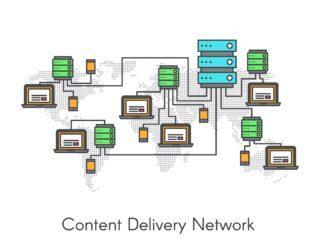
Before discussing what a multi-CDN strategy is, let’s define what a CDN is. A CDN is a content delivery network. To simplify its operation, a CDN is a geographically distributed caching system with points of presence (PoPs), enabling it to serve content to the end user from the cache server closest to them, thereby reducing network latency and page load times.
A CDN isn’t just used to deliver content to the end user, reducing network latency. The true potential of a CDN, and what truly improves load times beyond network latency, lies in caching techniques. Serving a cached object from memory is infinitely faster than generating a web page from scratch, including the necessary database calls.
An effective CDN ensures that content is available, that throughput is sufficient to deliver it, and that latency is low enough to prevent delays in reaching users. When a CDN fails to perform as expected, the quality of service drops, negatively impacting the user experience.
CDN and bandwidth
The market’s need for CDN solutions is directly linked to the explosion of broadband networks: smartphones, related applications, services, and online content consumption will increase global traffic by 1.4 zettabytes annually. Mobile data traffic in Spain is projected to reach 2.9 exabytes annually by 2022, representing a year-on-year growth rate of 47%. Estimates indicate that by 2022, 72% of internet traffic will pass through CDNs.
How can we manage all this growth while maximizing its potential? We know that CDNs can perform differently at different times or in different locations, and it’s no secret that they can experience outages and slowdowns. With a multi-CDN strategy, content is hosted on more than one CDN provider, which can boost application performance and, in many cases, reduce costs.
Approaches to a CDN
Each CDN is developed according to a specific focus. Some are geared towards European traffic, others towards Latin American traffic, and so on. Traditionally, content distributors have sought the best CDN provider to serve their user base. For example, with the rise of video streaming, many are interested in the best video CDN. With multi-CDN deployments, several CDNs can be contracted to better cover different regions and the needs of the end customer.
This breaks the dependency on a single provider, as having all traffic on a single network increases the risk of performance issues or service downtime. When problems arise, content distributors have difficulty quickly involving other providers. Once integrated with a CDN, workflows are limited to the supported functionality of that provider.
If something like this happens, your website could display a 503 error for almost 30 minutes, significantly impacting its performance and availability, as demonstrated. This can happen to any CDN, so it’s better to be safe than sorry.
Multi-CDN strategy
When using a multi-CDN strategy, content is hosted on more than one CDN provider, routing traffic through the healthiest CDNs at the time of the request, based on the user’s location and ISP. This results in better performance, site availability, and, in many cases, reduced costs. For example, if you have users in Latin America, the price charged by one CDN for that traffic will vary depending on the provider. Each CDN is different and has its own specialty, like doctors, and this model gives you access to different specialties, with varying prices, locations, and performance levels.
In short, a multi-CDN strategy is a configuration of two or more CDNs, with each provider handling a portion of the request volume. In most cases, a load balancing scheme is defined to determine how traffic will be distributed among the CDNs. With this model, everyone benefits: websites enjoy maximum performance and availability; end users have optimal access to sites; and the CDN providers themselves reap the greatest rewards. Ultimately, the internet itself benefits from this model because it experiences a healthier distribution of traffic.
Advantages of a multi-CDN strategy
Remember this: a multi-CDN strategy will give you 3 major advantages:
- Performance: Unlike individual CDNs, multi-CDN solutions are deployed as a combination of several Points of Presence (PoPs) from different CDN providers. This solution typically offers more PoPs, covering a much larger geographic area, resulting in optimal performance and virtually unlimited scalability worldwide.
- Reliability: The largest providers will talk about their reliability statistics and the resources they have available to guarantee service uptime. But, as we’ve seen countless times, no company is immune to technological failures, security breaches, or unforeseen events. Distributing reliability risk as part of a Multi-CDN strategy can give site owners peace of mind that the reliability of their entire network isn’t a single-point-of-failure risk.
- Costs: Distributing traffic volume across multiple CDNs automatically dilutes the flow across each individual network, and due to this perceived decrease, a provider can charge more. This problem is solved by implementing a multi-CDN strategy, where you have multiple options in terms of pricing, performance, and locations, allowing you to choose the one that best suits your needs.
So, what are you waiting for? Implement a multi-CDN strategy to optimize your website’s performance, reliability, and costs. At Transparent Edge, we can advise and support you throughout this process. Let’s talk!