01 Jun 21
Press-releases
27 Oct 25

Madrid, October 27, 2025: Transparent Edge has introduced an important new feature in its Anomaly Detection solution, offering an additional layer of visibility and control over the traffic fluctuations that media outlets are experiencing as a result of changes to Google’s algorithm.
The new referrer anomaly allows unusual traffic patterns from third parties (aggregators, social networks, etc.) to be identified. This visibility is key to distinguishing real reader behavior from automated or manipulated traffic, protecting SEO positioning, and detecting possible attacks or artificial flows that distort records and can affect the performance or reputation of digital media.
“Many media outlets have seen their organic traffic altered without clear explanation. With this advanced referrer detection, we help our clients better understand the real origin of their audience and protect themselves from anomalous flows that can distort their positioning or metrics,” explains Diego Suárez, CTO of Transparent Edge.
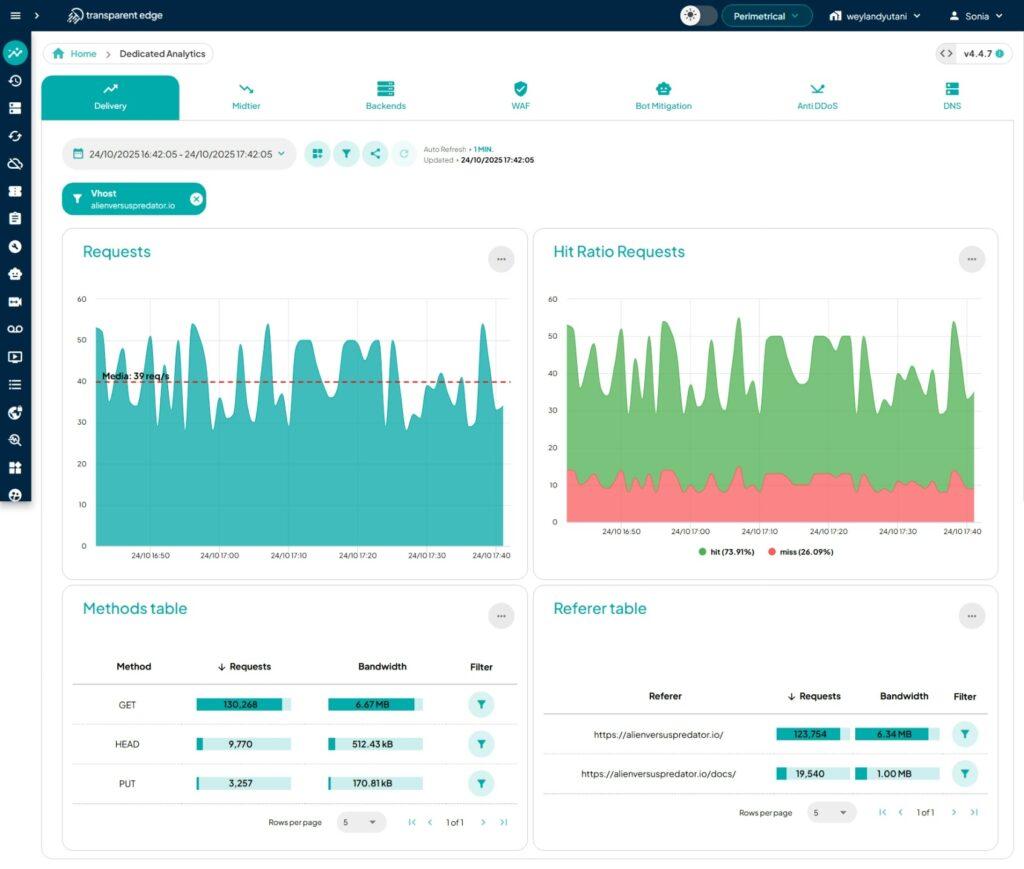
This update expands Perimetrical’s anomaly module, which already detects hundreds of deviations in user behavior, latency, request volume, and geolocation, reinforcing the observability and resilience of web infrastructures.
Alongside this new feature, the technology company has integrated an MCP into its technical documentation, with the aim of making it easier for customers to automatically generate VCL (Varnish Configuration Language) code to customize policies and rules within the platform from their favorite agent or LLM.
Thanks to this integration, technical teams can create advanced configurations in a matter of seconds, improving security and traffic management without having to write code from scratch.
“Making technology easier to use for our customers is in our DNA. This new feature is useful for those customers who enjoy writing code and configuring custom policies, with the certainty of having a response that is 100% based on our documentation,” adds Suárez.
Compartir: